
On September 8, 2025, the Department of Homeland Security (DHS) publicly announced “Operation Midway Blitz” in an official press release posted on the DHS website. DHS states Operation Midway Blitz was launched by the Trump administration in honor of college student Katia Abaham, who was killed on January 19 in Urbana, Illinois by a drunk driver (who happens to be an undocumented immigrant).
As the code name suggests, Operation Midway Blitz is designed to target undocumented immigrants located “midway” in the U.S. (Chicago) through intense apprehension and removal conducted by the U.S. Immigration and Customs Enforcement (ICE) mirroring that of a “blitz.”
Specifically, Operation Midway Blitz targets “the worst of the worst criminal aliens in Chicago,” according to DHS Assistant Secretary Tricia McLaughlin.
Since the implementation of Operation Midway Blitz in Chicago, ICE agents have arrested an estimated 500-3,000 individuals. In the wake of these apprehensions, the Trump administration has disclosed approximately 607 detainees—only 16 of which had a criminal history and were considered “a ‘high public safety risk.’”
This influx in immigration enforcement has been marked by major ICE raids, including an apartment complex raid at 7500 S. South Shore Drive on September 30, 2025. Reportedly, 300 federal agents from ICE, U.S. Customs and Border Protection (CBP), the Federal Bureau of Investigation, and the Bureau of Alcohol, Tobacco, Firearms and Explosives apprehended 37 individuals from 1:00 to 3:00 am.
According to local news outlets, including the Chicago Sun-Times, federal agents leveraged high-risk military tactics during the raid, deploying Black Hawk military helicopters for forced entry on the apartment’s roof and the use of flash-bang grenades to disorient residents as agents zip-tied them during apprehension.
Among those detained were U.S. citizens.
Purportedly, CBP agents conducted this raid after the building’s landlord alerted authorities “that Venezuelans in about 30 units were squatters and had threatened other tenants” and led to multiple months of investigation prior to apprehensions.
Out of the total arrests, authorities have so far filed no charges against the arrestees or publicly released evidence of their criminal histories.
Following the Southshore apartment complex raid, ICE has carried out several major detentions and arrests in the Chicagoland area. Most recently, federal agents were seen raiding a construction site in the Lakeview neighborhood on October 24, 2025 without a warrant. When ICE agents apprehended a construction worker, an estimated 50 neighbors approached the agents’ SUV and two agents reacted by deploying a canister of tear gas.
Chicago’s response to Operation Midway Blitz
Amid increased immigration enforcement from Operation Midway Blitz, Chicago community leaders have pushed back in an effort to protect the city’s historic “sanctuary” status for undocumented individuals.
In particular, on October 6, 2025, Mayor Brandon Johnson signed the “ICE Free Zone” executive order that prohibits federal immigration agents from using city-owned property during their operations. This order adds to Johnson’s previously established Protecting Chicago Initiative and Chicago’s Welcoming City Ordinance, both of which aim to protect undocumented immigrants from deportation.
Across Chicago, several residents have also begun resisting immigration enforcement through creative means.
For instance, since January, members of the Little Village Community Council in the Little Village neighborhood have distributed 1,200 bright orange whistles to residents. Neighbors use these whistles to alert residents if ICE is spotted in the neighborhood, in hopes of protecting undocumented individuals from apprehension.
Further, with some local businesses reportedly experiencing downturns worse than those of the COVID-19 pandemic due to decreased customer activity resulting from fears surrounding immigration enforcement, several organizations are offering financial support.
Among these coalitions include the Street Vendors Association of Chicago, who Block Club Chicago claims “has raised $184,000 of its $300,000 goal to provide emergency fund support to street vendors who are too fearful of ICE raids to go out and sell their wares.”
DePaul Prep’s response to Operation Midway Blitz
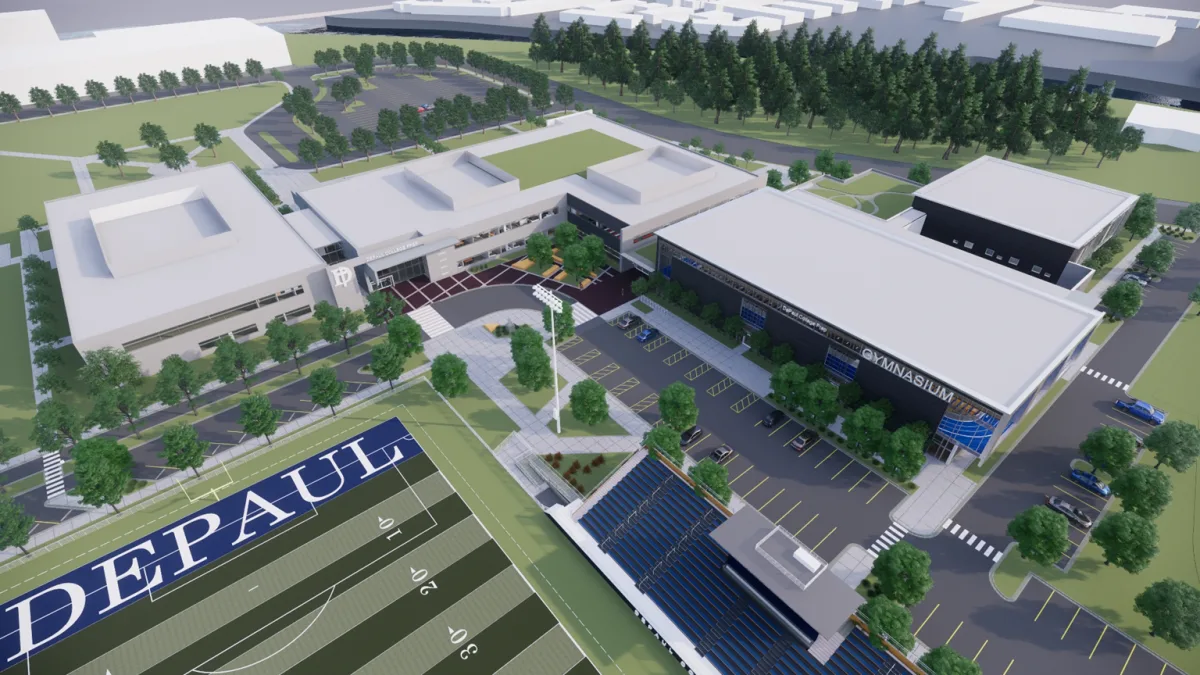
DePaul College Prep, located in the Roscoe Village neighborhood of Chicago, has continued to take proactive measures in protecting the school community from local immigration enforcement.
Most recently, school administration sent out an email to DePaul Prep faculty and students after being notified of ICE activity in nearby Roscoe Village and Clybourn Corridor areas.
Administrators stated that DePaul Prep remains a “private, closed campus” to immigration authorities and that “if any student or adult feels unsafe at dismissal time they are welcome to remain in the Commons [area] after school to wait for their ride home.”
Moreover, amid Operation Midway Blitz, some DePaul Prep faculty have attempted to bring attention to increased federal immigration enforcement.
For example, Bernadette Respante, head of the Theology Department at DePaul College Prep, engaged in a protest alongside colleagues at the end of October outside the Broadview Detention Center.
The Broadview Detention Center, located in the Village of Broadview (approximately 12 miles outside West downtown Chicago), is reportedly a short-term and the primary detention center for immigrants arrested under Operation Midway Blitz.
Outside the detention center, besides Raspante and her coworkers, thousands of people including members of The Coalition for Spiritual and Public Leadership (CSPL) gathered throughout early October and on November 1 (on All Saints Day) to offer the Eucharist for detained immigrants and protect their religious freedom amid imprisonment.
“A delegation of priests and a nun, who have been at the Broadview Detention Center every day for the last 30 years doing immigration work, tried to bring the Eucharist into the detention center,” explained Raspante. “So that people who are being detained could receive [it].”
However, ICE agents promptly denied the group entry, citing “safety and processing restrictions” despite CSPL’s historic access to administer the eucharist at the Broadview ICE facility.
As Raspante explained, “People are being denied their right to spiritual counsel and religious practice.”
These restrictions imposed by ICE agents at the Broadview Detention Center contradict freedom of religion in the American prison system, guaranteed under the First Amendment.
“Prisoners across the United States are allowed [the Eucharist],” said Raspante. “It’s very clear that these people are being treated differently than our prison system has bounds and rules for.”
Operations at the Broadview Detention Center have amplified the effects of Operation Midway Blitz on the Chicagoland community, cultivating an atmosphere of intensity as immigration enforcement continues to increase through Broadview regulations.
According to Block Club Chicago, since the beginning of October, approximately 80 protesters have been arrested outside the Broadview Detention Center, of which include “14 ‘suburban moms’ staging a sit-in protest” on the street outside the facility.
“Our own government is reacting very violently against our own citizens,” Rapsante said. “As if we were an enemy force.”
Looking Ahead
As confirmed by multiple sources, Operation Midway Blitz has allegedly reduced its activities after Judge Jeffrey Cummings of the U.S. The District Court for the Northern District of Illinois ordered hundreds of detainees to be released from the Broadview Detention Center on November 12.
In light of this recent development, Border Patrol commander Gregory Bovino has reportedly left Chicago while 200 Texas National Guard members vacated the city and DHS officially closed its Naval Station Great Lakes command center on November 14.
While DHS has been seen scaling back Operation Midway Blitz in Chicago, on November 15, federal immigration authorities announced the initiation of another immigration initiative on the DHS’s website—Operation Charlotte’s Web—in Charlotte, North Carolina.